

Search engine optimisations
Unsure how to grow your website rankings, traffic, lead, and revenue? We can create a strategy that aligns with your goals.

Struggling to drive revenue?
More traffic does not always mean more revenue. To grow effectively, your website needs to appear for the right searches, speak clearly to the right audience, and guide visitors towards taking action. We look at the full journey, from how customers find you on Google to how they experience your website, then create an SEO strategy focused on improving rankings, increasing qualified leads, and turning organic search into a reliable growth channel.
Based in Brighton?
If you prefer to meet in person, I can be at the office, or we can grab a coffee in town
How we work
- DiagnoseAudit your website SEO
- PrioritiseIdentify areas for improvement based on business objectives
- ImproveFix problems and add data tracking
- ValidateMeasure the impact of the fixes periodically
- MonitorCheck your performance to identify new opportunities
Growth 🌿
After the website build, we will monitor your marketing ecosystem & advise you on how to stay on top of competition.
Website case study
UnBarred is a micro brewery based in Brighton that required support with their Shopify website. We updated their Shopify theme, added custom theme functionality, improved on page SEO, and optimised their homepage.
Read more case studies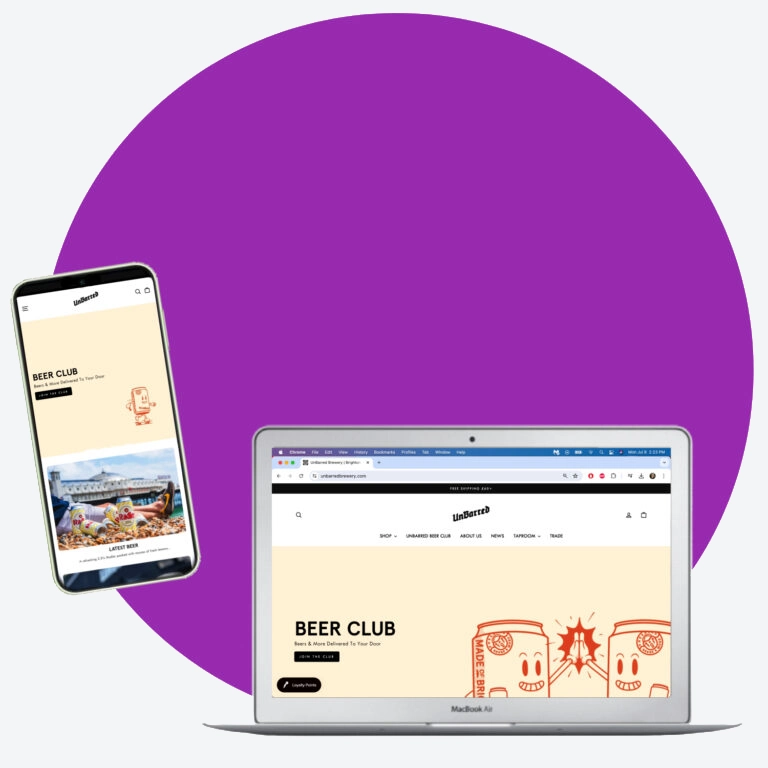
Frequently asked questions
What is Brand Clarity & Differentiation in SEO?
It defines how your brand stands out from competitors online. We align your unique value proposition with your search strategy so users choose you over anyone else.
How do you align content with audience intent and search behaviour?
We analyse exactly what your target market is searching for. Then, we map your content positioning to match their specific needs at every stage of the buying journey.
Why do tone of voice and trust signals matter for SEO?
Search engines reward credible websites. Maintaining a consistent tone of voice and clear trust signals builds authority with both Google and your human audience.
How do you handle the competitive landscape?
We audit your competitors’ online presence. This reveals gaps in their strategies, allowing us to position your brand to capture their market share.
What are Site Speed & Core Web Vitals?
These are critical Google performance metrics. We optimise your site’s loading speed and visual stability to improve rankings and user experience.
Why are crawlability and indexing important?
If Google cannot crawl your site, it cannot rank it. We fix indexing issues to ensure search engines can easily find and read your pages.
How do you handle JavaScript rendering issues?
Heavy JavaScript can hide content from search engines. We fix rendering bottlenecks so Google fully understands your modern web applications.
What technical errors do you fix on a website?
We resolve broken links, URL structure flaws, incorrect redirects, and canonical errors that drain your site’s technical health.
What is Schema markup and sitemap optimisation?
Schema markup is code that helps Google understand your content context. Combined with optimised sitemaps, it guarantees faster, more accurate indexing.
How do you optimise content for higher impressions and clicks?
We refine headings, semantic structure, and keyword mapping. We also rewrite meta tags specifically designed to increase your click-through rate (CTR).
What is your internal linking strategy?
We connect related pages across your site. This distributes page authority and creates a clear user flow that guides visitors toward conversion.
How do you drive conversion improvements on individual pages?
We audit page clarity and user flow. By removing friction, we turn your organic search traffic into paying customers.
How do you build credibility beyond my website?
We perform backlink audits and competitor link analysis. This identifies high-value digital PR opportunities to earn authority-boosting backlinks.
Do you offer Local SEO services?
Yes. Where relevant, we optimise your local search presence and brand reputation signals to capture geo-specific customer searches.
Why does SEO need design and development support?
SEO works best when paired with exceptional user experience. We provide landing page design and UX clarity improvements to boost performance.
What development fixes do you implement?
We manage site architecture updates and code-level performance optimisation. This ensures your development team deploys SEO-friendly code.
What is search engine optimisation (SEO)?
SEO is the process of improving a website’s visibility on search engines like Google. It involves optimising content, improving site structure, and building backlinks to rank higher in search results. SEO helps attract organic traffic by targeting relevant keywords and enhancing user experience.
When will I see SEO results?
Most businesses begin to see initial results within 3-6 months, while more substantial improvements may take 6-12 months or longer. The timeline varies based on factors such as competition, market trends, and the current state of your website. Websites undergoing major changes such as code updates, migrations, or editorial adjustments may experience delays. In highly competitive industries, achieving higher rankings through SEO typically requires more time and effort.
Which tools do you use for SEO?
Google Keyword Planner for identifying new keyword opportunities, Google Search Console for tracking the performance of pages and keywords, Google Analytics for identifying weak areas of the website, and Hotjar for analysing user interaction and gathering feedback through surveys.
Can I do SEO myself?
If your website has a lot of traffic, working with professionals is important, since any changes you make yourself can have a detrimental effect.
Is SEO an ongoing process?
Yes, we recommend revising your SEO and website content on a monthly basis. It’s a good idea to monitor the changes that are made and how they affect website performance.
Brett, COO at UnBarred Brewery said this:
We’ve been working with Ben on an ad-hoc basis to help fix issues, improve user experience, tweak design and functionality to help make the experience better for our customers. Ben has been great at communicating, ideas, explaining and why how things need to be done and create easy to use guides if we or anyone else ever needs to revisit the work that has been done.